Ever tried on swimsuit after swimsuit and felt like something was missing? That tiny adjustment that takes you from second-guessing to rock-solid confidence? Good news: getting swimwear right is less about “perfect bodies” and more about smart fit, strategic details, and knowing what works for you.
Let’s walk through body shape basics, fit checkpoints, and the support features that make a real difference, so you can hit the beach or pool feeling ready for anything.
What actually matters when picking swimwear?
Fit first, always. A suit should sit flat against the body without digging, gaping, or riding up. Support comes next: think cup construction, strap width, under-bust bands, and power-mesh linings. Finally, design details, ruching, wrap fronts, diagonal seams, and color-blocking, can shape the eye and create clean lines.
Remember ─ size is only a starting point. Brands vary, so use measurements, check size charts, and try multiple sizes of the same style.
Start with your body shape (then fine-tune)
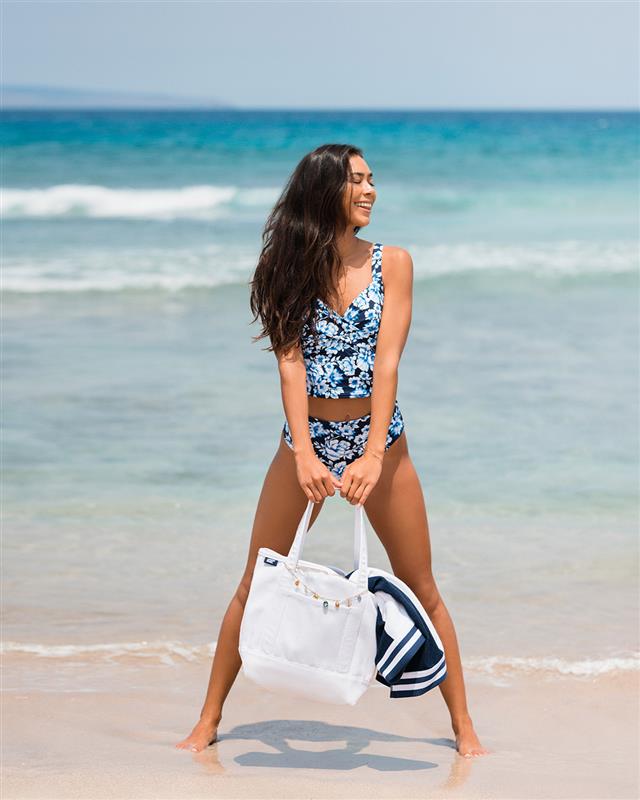
Body shape is a guide, not a rulebook. Use these pointers as a starting point, then adjust for your style, comfort level, and activities.
Hourglass (balanced shoulders and hips with a defined waist)
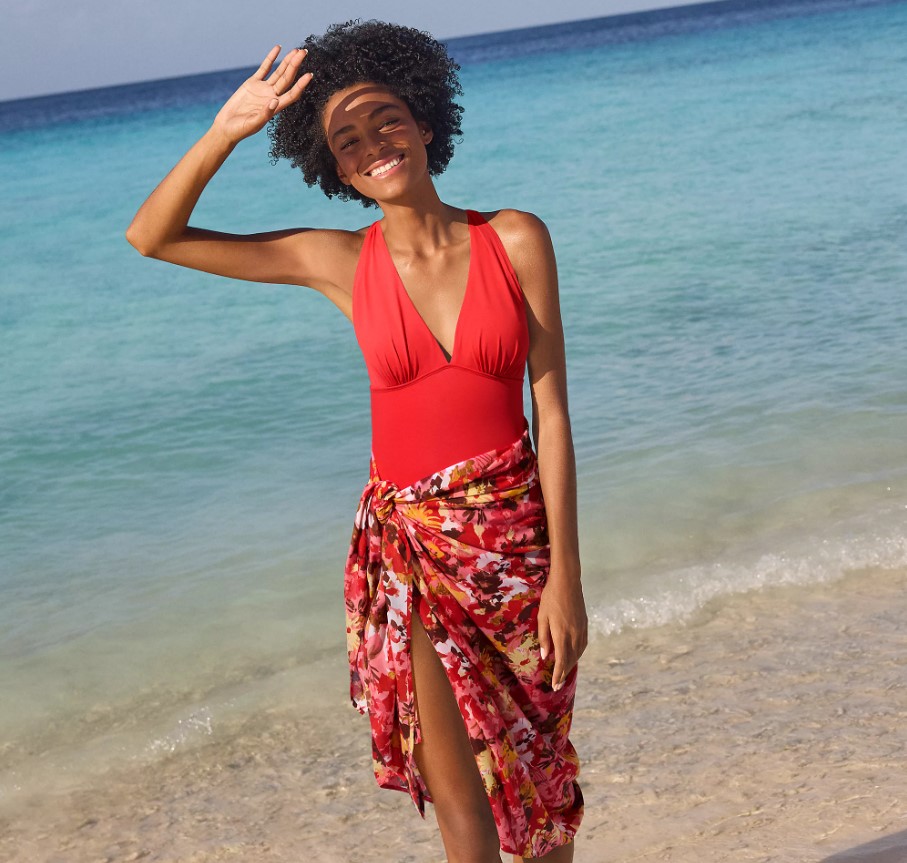
You already have natural balance, show it off or play with proportion. Look for wrap-front one-pieces, plunge or sweetheart necklines, and high-waist two-pieces that keep the midsection smooth. Belted suits and side-panel color-blocking highlight your waist without feeling fussy. If you prefer more coverage, a longline bikini top paired with a mid- or high-rise bottom keeps everything streamlined.
Pear/Triangle (curvier hips and thighs, narrower shoulders)
Direct attention upward. Try tops with ruffles, draped necklines, or bold prints, paired with darker, matte bottoms. A-line swim skirts with clean seams, high-cut legs to lengthen, or one-shoulders to create balance all work beautifully. If you like a one-piece, look for diagonal seams or side ruching that visually narrows the hip line.
Apple/Round (fuller midsection, slimmer legs)
Seek core support and length. Wrap-front one-pieces, surplice necklines, and gathered mid-panels create subtle definition. Ruching and power-mesh help smooth without feeling tight. Consider options like tummy control swimsuits for targeted shaping and comfort; pieces like these use supportive linings to hold you comfortably, not rigidly. A higher-cut leg can add length, while a V-neck draws the eye upward.
Athletic/Rectangle (straighter frame, fewer curves)
Add shape with texture and lines. Look for ring details, tie-fronts, seaming under the bust, and tops with light padding or molded cups. Peplum tankinis, wrap styles, and color-blocking at the bust and hip create curves visually. If you prefer minimal, a clean scoop or square-neck one-piece with a defined under-bust seam does the job with quiet confidence.
Inverted Triangle (broader shoulders/bust, narrower hips)
Balance the top half by building interest below. Try textured or patterned bottoms, side ties, or ruffle-hem swim skirts. On top, aim for clean, supportive lines: wider straps, V or square necklines, and supportive bands. A color-blocked suit with darker up top and brighter at the hips helps distribute focus.
Bust support ─ The features that make a difference
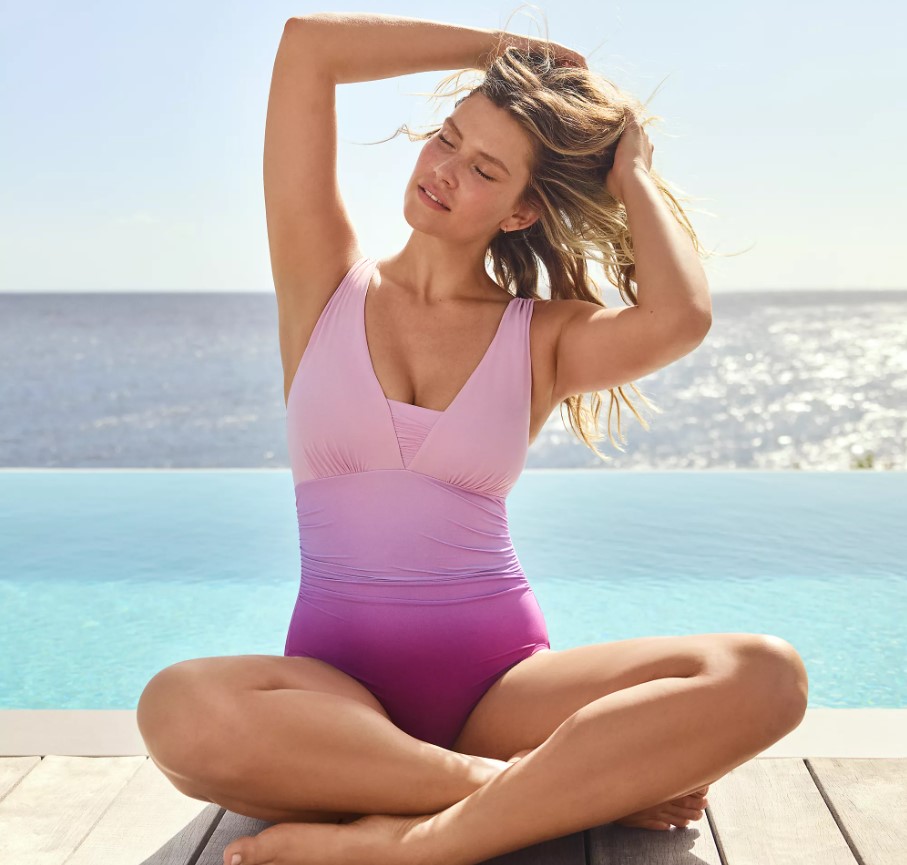
Small to mid bust
- Lightly lined or molded cups add shape and smoothness.
- Triangle, bandeau (with silicone grippers), or bralette tops offer easy comfort.
- Halter and one-shoulder styles bring soft lift and visual interest.
Full bust and DD+
- Underwire or under-bust bands provide structure.
- Wider, adjustable straps prevent digging and help fine-tune lift.
- Full-coverage or balcony-style cups keep you secure while still looking refined.
- If you’re active, look for cross-back, racerback, or multiway straps that stabilize movement.
Fit tip ─ The band should feel snug on the loosest hook. If the cups wrinkle, go down a cup; if they spill, try a larger cup or more coverage.
Tummy support and core comfort
You don’t need rigid shaping to feel supported. Look for:
- Power-mesh panels that smooth the midsection while remaining breathable.
- Ruching, wrap fronts, and diagonal seams that create length and soften the silhouette.
- High-waist bottoms with a soft, stay-put waistband that won’t roll.
If you want extra control, try options like tummy control swimsuits that use targeted paneling to keep everything feeling secure without sacrificing comfort.
Leg lines, coverage, and confidence
Small changes in leg cut and coverage can completely change the look:
- High-cut legs lengthen and add a lighter feel.
- Classic cuts keep things timeless and comfortable.
- Boyshorts offer more coverage but can visually shorten the leg, counteract with a higher waist or vertical seams.
- For seat coverage, check how the back sits when you move; it should stay in place without riding up.
The 10-second fit check (in the dressing room)
- Straps: Slide a finger under; they should feel secure, not tight.
- Band: Take a deep breath, no pinching or rolling.
- Cups: Jump or twist gently; you should feel supported with no spillage or gaps.
- Leg openings: Walk in place; edges should stay smooth without digging.
- Back view: Turn and check for bunching, pulling, or sheerness when stretched.
If you’re between sizes, try the larger one and adjust straps and ties; comfort usually wins.
Prints, colors, and textures that work for you
- Dark, matte fabrics recede; bright or glossy fabrics draw focus.
- Vertical stripes and chevrons lengthen; diagonal color-blocking sculpts.
- Textured knits, smocking, and ribbed fabric add dimension and can soften a straighter frame.
- If you want to highlight shoulders and face, a bold top with a quieter bottom is a simple, reliable formula.
Mix-and-match strategy that solves fit fast
Bodies aren’t one-size-fits-all, and your swimwear set doesn’t have to be either. Pair the top size that truly fits your bust with the bottom size that fits your hips without compromising fashion.
Keep a consistent color family or repeat a detail (like a ribbed texture) so the separates feel intentional. This approach is especially helpful if your size differs by more than one step between top and bottom.
Fabric, function, and care
- Look for chlorine-resistant blends if you’re a frequent pool swimmer; they keep color and elasticity longer.
- UPF-rated fabrics help guard against sun exposure (still wear SPF).
- Rinse in cool water after each wear; hand wash with a gentle cleanser, then lay flat to dry.
- Avoid wringing; it can stress fibers and stretch the suit out.
Common fit fixes
- Bottom digs at the hip? Try a softer waistband or a side-tie you can adjust.
- Bandeau slips? Choose one with silicone grippers and side boning, or add a removable strap.
- Top gaps at the neckline? Go down a cup or try a plunge or wrap that sits closer to the sternum.
- One-piece feels short in the torso? Look for “long torso” options or suits with adjustable straps and higher stretch.
Final thoughts
There’s no single “right” suit; there’s the suit that fits your life, your body, and your taste. Start with support, add the design details that make you feel amazing, and remember that comfort is non-negotiable. Try, move, adjust, and choose the pieces that make you want to jump straight into the water with a smile.



I’m Anita Kantar, a seasoned content editor at Beautified Designs, where I meticulously align every piece with our goals. Joining this team marked a significant milestone in my career journey. Beyond work, you’ll find me immersing myself in literature, cherishing moments with loved ones, and indulging in lifestyle, travel, and culinary adventures. Oh, and I have an undying love for fashion and makeup, too!